

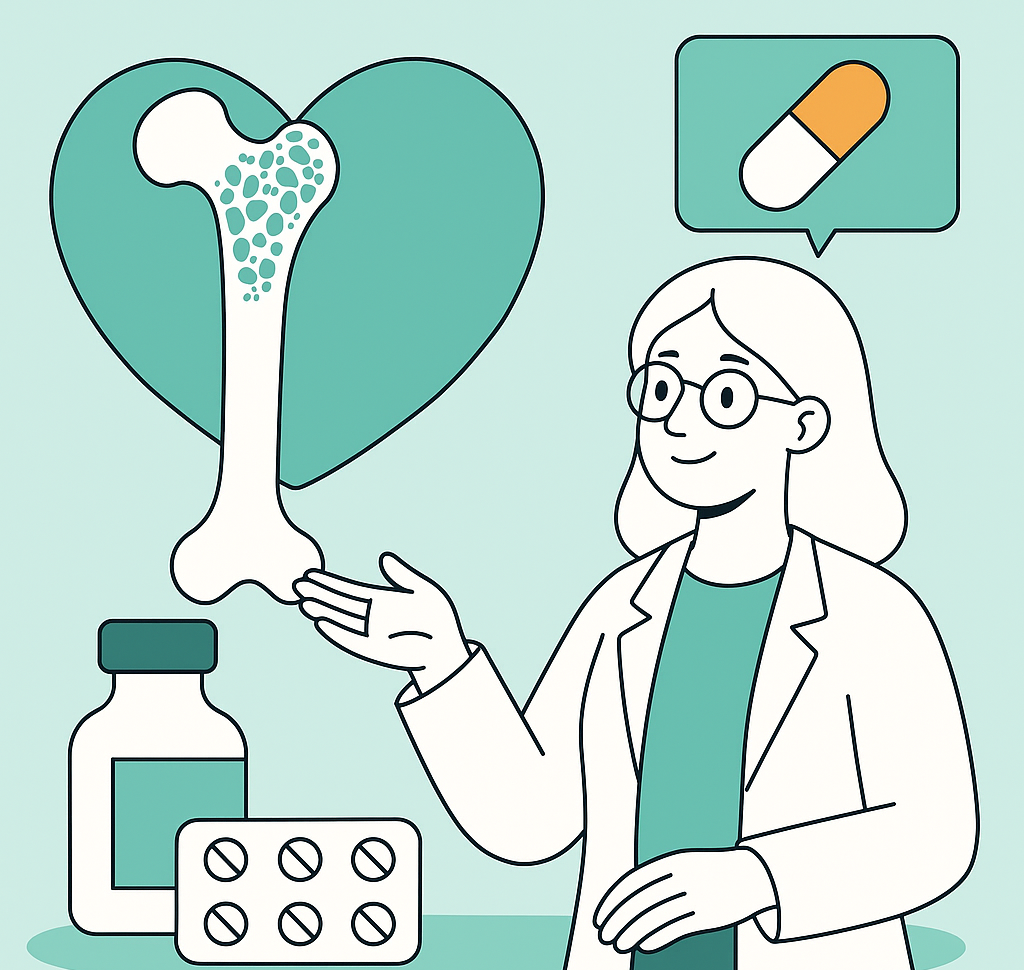
Do you sense that creeping dread of a fall turning into something far worse? Osteoporosis is more than brittle bones – it’s a daily struggle to keep your strength and self-sufficiency. But here’s the good news: osteoporosis bisphosphonates provide a lifeline, stopping bone loss and lowering the risks of fractures. Let’s examine how these drugs, combined with the right lifestyle, can change the course of your bone health.
Table of Contents
- What is Osteoporosis?
- Osteopenia vs. Osteoporosis
- What causes Osteoporosis?
- Early Signs of Bone Density Loss
- Bisphosphonates for Osteoporosis
- Lifestyle Modifications to Prevent Osteoporosis
- Osteoporosis in Postmenopausal Women: Special Considerations
- How to Prevent Fractures with Weak Bones: Steps You Can Take?
What is Osteoporosis?
Osteoporosis is a condition in which the bones lose their strength, become brittle, and are more likely to break. This occurs when your body loses excess bone or fails to produce enough new bone. Your bones gradually become less dense, which is why osteoporosis is a “silent disease.”
Most individuals are unaware they have it until a fracture. It typically occurs in older adults, especially postmenopausal women, and is something that must be addressed. That is where bisphosphonates for osteoporosis are helpful. They reduce the activity of the cells that resorb bone, which makes bones stronger and less likely to fracture.
Osteopenia vs. Osteoporosis
Before osteoporosis is well established, there is usually an intermediate stage referred to as osteopenia, when bone density begins to fall short but is not severe enough to be classified as osteoporosis. This can be a sign, and you can take steps early before any more damage occurs.
Bisphosphonate therapy for osteoporosis sometimes works even at this earlier point, potentially keeping full osteoporosis from emerging. While osteopenia is less severe than osteoporosis, it will cause fractures if it is left to progress further. Taking medication and lifestyle steps early on can prevent your bones from becoming brittle well before they develop osteoporosis.
What causes Osteoporosis?
Osteoporosis has a number of causes. The most important is aging, as bone density decreases with age. Gender is also a factor, with women being at greater risk, especially after menopause when estrogen levels are lower.
A family history of osteoporosis, a poor diet (particularly in calcium and vitamin D), a lack of exercise, smoking, and heavy alcohol use are other risk factors.
Some medications and diseases, like rheumatoid arthritis or hyperthyroidism, also raise the risk. Bisphosphonates for osteoporosis address the problem by preventing bone resorption, giving bone-building processes time to catch up and keep bones healthier and stronger.
Early Signs of Bone Density Loss
Identifying the early signs of bone density loss allows you to act before osteoporosis sets in. Although it’s commonly called a silent disease, there are warning signs that can suggest something is amiss.
For example, if you find you’re suffering from chronic back pain or posture changes these are potential early indicators of weakened bones.
A fracture from a sudden fall, even from a mere slip, can be an indicator. Regular screening and taking proactive steps like taking bisphosphonates for osteoporosis can go a long way in minimizing the risk of these issues getting out of hand, so don’t wait until the symptoms get out of hand before consulting.
Bisphosphonates for Osteoporosis
Although bisphosphonates for osteoporosis are a treatment mainstay, they are most effective when used in combination with other treatments. These drugs inhibit bone resorption or slow the breakdown of bone tissue. This maintains bone density and minimizes the risk of fractures.
But pills alone are not sufficient. To really make a difference, you need to combine them with healthy lifestyle modifications. Diet, exercise, and smoking cessation are all integral components of the equation. By eating a balanced diet with adequate calcium and vitamin D, being physically active with weight-bearing exercise, and quitting smoking, you can optimize the effectiveness of bisphosphonates and promote long-term bone health.
Lifestyle Modifications to Prevent Osteoporosis
Small changes in lifestyle can make a huge difference in bone health. Weight-bearing exercise, such as walking, running, or strength training, is essential to bone density. Proper intake of calcium and vitamin D from diet can also play a role in bone structure. Smoking and heavy alcohol use can accelerate bone loss, so avoiding these can also be a key part of prevention. These easy changes, combined with bisphosphonates for osteoporosis, are the foundation of an effective treatment plan that not only controls the disease but allows you to live well.
Osteoporosis in Postmenopausal Women: Special Considerations
In women, menopause is a significant milestone that generally results in sudden bone density loss due to reduced estrogen levels. This renders the postmenopausal woman very susceptible to osteoporosis.
Bone loss may be due to hormonal changes, causing faster absorption of bone by the body than it can be replaced. Due to this, it’s very essential for women to monitor bone health closely post-menopause.
Bisphosphonates are usually used to reduce bone loss, maintain bone strength, and reduce the risk of fracture. Along with drugs, a diet supplemented with calcium and vitamin D and physical activity are essential in the treatment of osteoporosis in postmenopausal women.
How to Prevent Fractures with Weak Bones: Steps You Can Take?
When you have brittle bones, the risk of fractures is greatly increased, but there are measures you can take to avoid them. First, make your living space safe. Clearing away tripping hazards, installing grab bars, and having good lighting can help avoid falls.
Wearing supportive shoes and using assistive devices when necessary, can also offer additional stability. Being active is also essential, low-impact activities such as swimming or cycling are ideal for individuals with osteoporosis.
Disclaimer
The information in this article is intended for informational purposes and not as a substitute for professional medical advice. Always consult a physician or other qualified healthcare provider for specific questions about your health.