

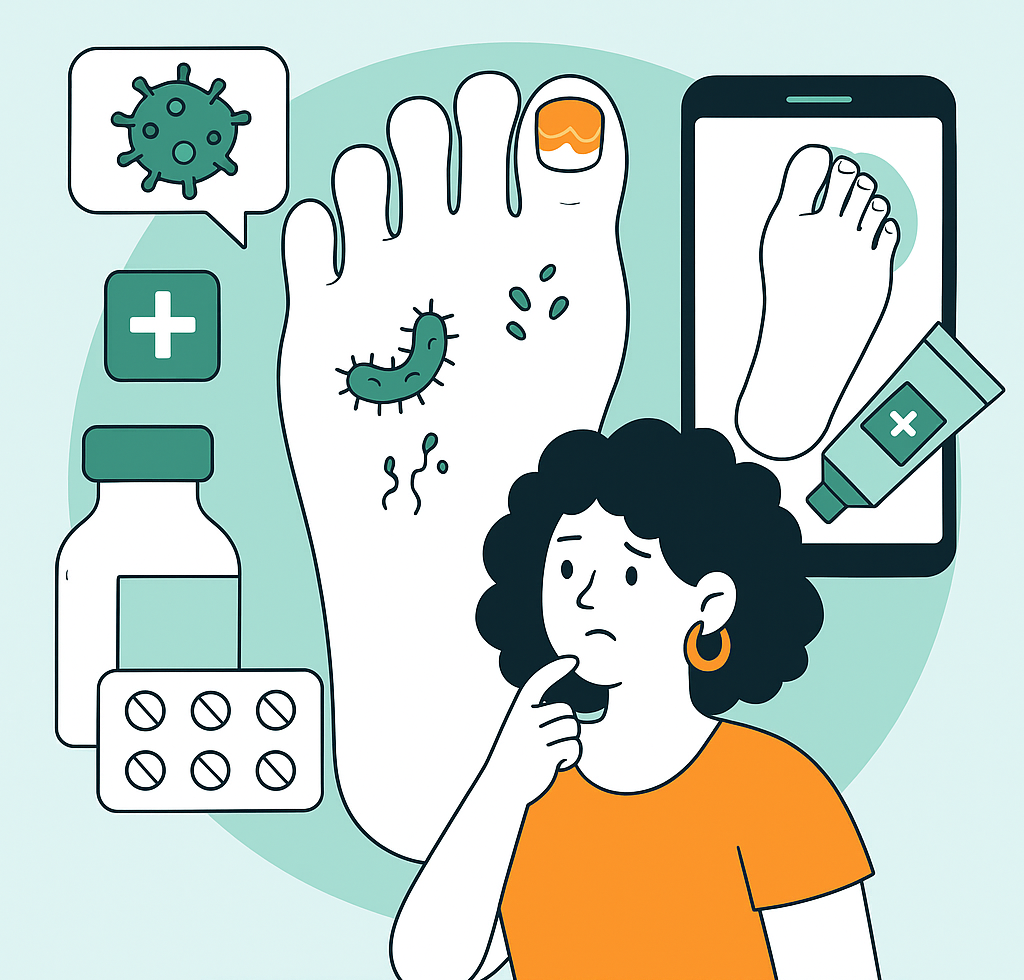
Toenail fungus and athlete’s foot are common fungal infections that affect millions of people worldwide and cause discomfort and embarrassment. While both affect the feet, they have distinct symptoms and treatments. This guide explores their differences, causes, and the best antifungal remedies, from creams to oral medications to restore healthy nails and skin while preventing reinfection. Fungal infections are reported to cause 23% of foot diseases and 50% of nail conditions in persons seen by dermatologists, but are less common in the general population, affecting 3% to 12% of persons.
Table of Contents
Toenail infection (Onychomycosis) is found more frequently in the elderly, and in more males than females. Onychomycosis of the toes is usually caused by dermatophytes, most commonly Trichophyton rubrum and T. mentagrophytes.
What is the difference between athlete’s foot and toenail fungus?
Athlete’s foot (tinea pedis)
It is caused by a fungus (dermatophyte) that makes skin itchy, flaky and red, occasionally blisters, and causes white cracks to appear, especially between toes and on the side of foot. It is often picked up from walking bare foot on damp, contaminated floors such as in communal changing rooms. If washing your hands after touching a contaminated area is not in your checklist then it can spread to other parts of the body, including the groin and underarms.
Toenail Fungus (Onychomycosis)
These fungi infection can occur on any part of the nail and take a long time to develop. They cause nails to discolor, become crumbly or thicken. Normally the nail will be discolored with a yellow or brown mark, or it may appear as white flecks on the nail. Quite often the infection will start at the tip of the nail, usually to one side, but it may spread to affect the whole nail plate, and may even spread to other nails. Sometimes the surrounding skin and nail bed may become inflamed and irritated, but quite often there is no pain involved. The nails may also become smelly. It is most common in people who already have athlete’s foot as this infection can penetrate the nails.
How Athlete’s Foot Spreads? Causes & Key Risk Factors
Toenail fungus and athlete’s foot spread through direct contact with infected skin or contaminated surfaces. The fungi grow in warm, moist environments like locker rooms, pools, and showers, where they can easily transfer to bare feet. Sharing towels, shoes, or socks with an infected person also spreads the infection, as fungal spores can survive on these items for long periods. Proper hygiene and protective footwear in public areas are key to prevention.
Several key factors increase the risk of developing toenail fungus and athlete’s foot. Wearing tight, non-breathable shoes traps sweat and moisture, promote fungal proliferation. Individuals with sweaty feet or poor foot hygiene practices are particularly vulnerable, as damp skin and inadequate drying between toes encourage infection. Small cuts or skin damage provide easy entry points for fungi, while compromised immunity or conditions like diabetes make it harder to fight off infections. These combined factors explain why athletes, seniors, and people with certain health conditions are more prone to fungal infections.
Recognizing Nail Fungus: Key Symptoms
Fungal nail infections cause several noticeable changes to the nails. The affected nails often become thickened and difficult to trim. The texture changes, turning brittle and crumbly with ragged edges that break easily. A distinct unpleasant odor often accompanies advanced infections. Early treatment is crucial to prevent the infection from worsening or spreading to other nails. When these symptoms appear, prompt antifungal treatment can help restore healthy nail growth.
Antifungal creams vs tablets
Topical Treatments
Antifungal nail creams can effectively treat fungal infections, but they require consistent, long-term use often twice daily for 6-12 months. Many people stop treatment too soon, allowing the infection to worsen or spread. While over-the-counter options are gentler with fewer side effects, they are less potent than prescription oral medications.
Oral Medications
Fungal nail tablets work faster than topical treatments because they attack the infection from within the bloodstream. A 12-week course of terbinafine-based medication (like Lamisil) can kill the fungus and stop further damage. Though oral antifungals may have more side effects (such as liver enzyme elevation or gastrointestinal symptoms), they are far more effective for moderatere to severe infections. While they would not repair existing nail damage, they allow healthy new growth to replace the infected nail over time. The first-line treatment agent for adults is terbinafine, and the treatment dose is 250 mg once daily for 12 weeks. terbinafine once daily. Terbinafine works by inhibiting fungal ergosterol synthesis via squalene epoxidase.
or: Terbinafine inhibits fungal growth by blocking ergosterol synthesis via squalene epoxidase inhibition, which compromises the fungal cell membrane.
Which Is Better?
For mild or early-stage cases, topical treatments may suffice if used diligently. However, persistent, widespread, or thickened infections usually respond better to oral medications. Consulting a doctor ensures the right approach based on infection severity and personal health factors.
How to Prevent Nail Fungus from Coming Back
Nail fungus often recurs even after effective treatment, making prevention crucial. The key defense involves maintaining excellent foot hygiene, washing and thoroughly drying feet daily, particularly between the toes, while using antifungal powder for those with sweaty feet and wearing moisture-wicking socks that are changed when damp. In public areas like pools, gyms and showers, protective footwear should always be worn and antifungal spray kept handy in gym bags. Proper nail care includes trimming nails straight across without cutting too short and regularly disinfecting nail tools, while shoes should be rotated and treated with antifungal sprays. Any athlete’s foot should be treated promptly, with weekly antifungal cream considered for maintenance, and underlying conditions like diabetes properly managed. The essential principle is that fungi grow in moist environments, so keeping feet consistently clean and dry provides the best protection against reinfection.
Best treatments for yellow or thickened nails
Yellow, thickened nails often caused by fungal can be treated with prescription oral antifungals like terbinafine (most effective), topical solutions (e.g., ciclopirox nail polish), or laser therapy for stubborn cases. For mild infections, home remedies like tea tree oil or vinegar soaks may help, though results are slower. Severe cases might require nail removal. To prevent recurrence, keep feet dry and trimmed, wear breathable shoes, and disinfect nail tools and shoes regularly. If symptoms persist, especially with diabetes, see a doctor for targeted treatment. Early intervention improves recovery chances.
Disclaimer
The information in this article is intended for informational purposes and not as a substitute for professional medical advice. Always consult a physician or other qualified healthcare provider for specific questions about your health.