
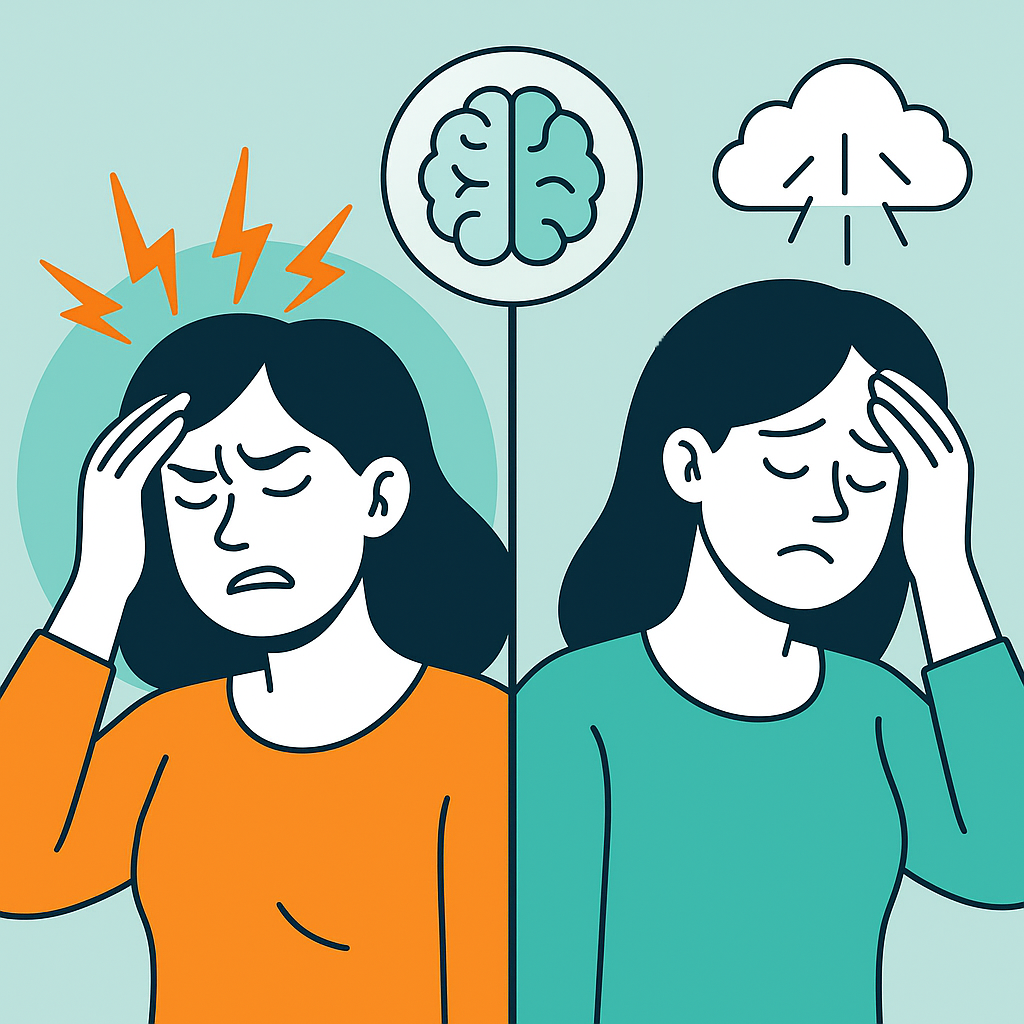
A headache can be a pesky nuisance, but a migraine? It’s a whole other level of suffering. If you’ve ever questioned yourself as to whether you’re dealing with a run-of-the-mill headache or the incapacitating agony of a migraine, you’re not alone. Knowing the difference between migraine and headache can make a difference in how you treat and manage your condition, so let’s examine what’s different and how to get relief quickly.
Table of Contents
Main Differences Between a Headache and a Migraine
At first glance, a headache and a migraine would appear to be the same, but they are two distinct ailments. Although both are a pain in the head, severity, duration, and symptoms can be worlds apart.
A regular headache typically has a milder or dull quality to it, typically over either the forehead or temples. You may experience tension, tightness, or pressure, but the ache is not typically incapacitating. You should be able to continue with your day, although you may still find it uncomfortable.
Migraine, however, is much more severe. It typically consists of severe, throbbing pain, frequently on one side of the head. The headache may persist for hours or even days, and it is commonly accompanied by other symptoms such as nausea, vomiting, and sensitivity to light or sound. Migraines, in fact, can be so debilitating that many victims are unable to get through the day, so it is important to know how to distinguish between the two.
You must be aware of the difference between headache and migraine because this will allow you to choose an effective treatment. While over-the-counter painkillers like Ibuprofen or Paracetamol might be sufficient for a routine headache, they might not be sufficient for the intense, typically incapacitating pain of a migraine. You will also be referred to preventive and lifestyle treatments that will make a significant difference to your quality of life in managing your condition.
Migraine Triggers and How to Avoid Them
Migraine triggers vary among individuals, but some of the most common triggers are food, lack of sleep, and stress. Alcohol, caffeine, flashing lights.
Some foods, such as chocolate, cheese, or foods that contain a large amount of MSG, are culprits behind triggering migraines in most individuals. Skipping a meal is also sufficient to cause a migraine, and thus, it is extremely crucial to maintain a consistent eating routine.
Stress is also a typical trigger, particularly if it is persistent. Whatever the reason is—work, family, or day-to-day stress—stress accumulates and results in a migraine. Therefore, relaxation techniques such as meditation, yoga, or even taking frequent breaks in between work can prevent them.
Sleep is also something to take into account. Both excessive and insufficient sleep can induce migraines. Having a regular sleep schedule and achieving the necessary 7-9 hours of sleep per night is the best way to avoid these debilitating attacks.
Knowing what your own migraine triggers are can allow you to take preventive measures, such as avoiding known food triggers or acquiring stress-reduction skills. A migraine diary can also allow you to track patterns and see which triggers affect you most so that you can take measures to control them before they bring on a thudding attack.
Fast-Acting Pain Relief Options for Headaches and Migraines
When a headache or migraine strikes, the last thing you can do is just sit there waiting for it to pass. You need fast-acting pain relief if you need immediate results to get you through the day.
For an average headache, something you can buy over the counter, such as Ibuprofen or Paracetamol, usually works to alleviate the pain. They are painkillers and anti-inflammatories, so they are a good starting point for mild and moderate headaches.
For migraines, though, more potent medication may be necessary. Triptans (like Sumatriptan and Rizatriptan) are the first line drugs for the treatment of acute attack of migraine. Prescription drugs such as Rizatriptan or Sumatriptan can bring quick relief to the majority of migraine victims. These drugs act to tighten blood vessels in the brain, decrease swelling, and prevent pain signals. Though these drugs are usually effective, they need to be taken under a doctor’s supervision to be safe and effective.
It is important to act quickly once you feel the onset of a headache or migraine. The sooner you take medication for the headache, the more effectively these drugs will work. If you have frequent headaches or migraines, discuss developing a long-term treatment plan with both immediate relief and prevention with your healthcare provider.
Hormonal Headaches in Women: What You Should Know
Hormonal shifts can be an etiologic factor in the development of headaches as well as migraines, especially in females. Hormonal headaches in females are frequent and may happen during menstruation, pregnancy, or menopause. Such headaches are generally associated with estrogen shifts.
If you find yourself getting regular headaches or migraines during your period or at other times of hormonal change, it should be monitored. Hormonal headaches may be manageable with hormonal treatment, but it would be best to see a health practitioner for individual advice.
Preventive Medications for Chronic Migraines
In patients with chronic migraines, the condition can be managed using preventive medication. These are drugs that decrease the severity and frequency of the migraine and, therefore, become less of a disturbance to your daily routine.
Preventive medications taken for chronic migraines are beta-blockers (e.g., Propranolol), Antidepressants (e.g., Amitriptyline) and Anticonvulsants (e.g., Topiramate). They works to reduce the frequency and severity of future migraine attacks.
In certain people, such medication can significantly decrease the number of days in a month spent suffering from migraines, thereby improving the quality of life.
It’s also worth mentioning that preventive therapies are a more long-term remedy. They often must be taken on a continuous basis, even when there is no attack, in order to prevent them from occurring. Your physician can assist you in making the best choice for your individual circumstances and medical history.
Remember that preventive medications work best when combined with lifestyle changes. Managing your sleep, diet, and stress on a regular basis, in addition to taking preventive medications, can be a great assistance and can stop migraines from taking over your life.
Disclaimer
The information in this article is intended for informational purposes and not as a substitute for professional medical advice. Always consult a physician or other qualified healthcare provider for specific questions about your health.