

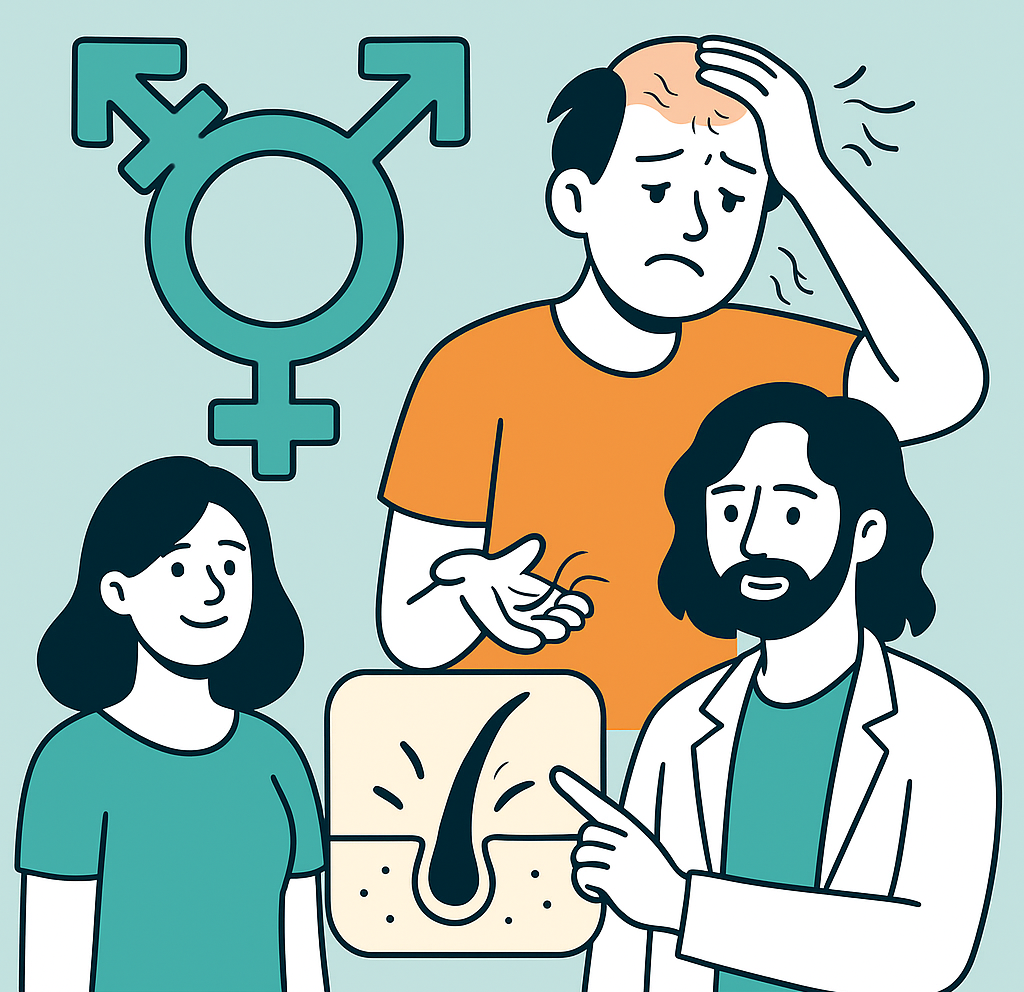
For most transgender people, transitioning is a deeply personal and transformative process. However, one challenge that often arises is hair loss. Research shows that trans men on testosterone are 33% more likely to experience male-pattern baldness, while trans women can slow hair loss with early treatment. Thankfully, with transgender hair loss solutions and lifestyle changes, you can maintain confidence throughout your transition. Let’s explore the best options.
Table of Contents
Understanding Hair Loss During Gender Transition
Hair loss in transgender individuals can occur for various reasons, including genetics, hormonal changes, and medical treatments. The transition process, especially hormone replacement therapy, significantly affects hair growth patterns.
How Hormones Play a Role
Hair loss affects both transgender men and women in different ways, primarily due to hormonal shifts. Here is how:
For Trans Men
Increased testosterone from HRT can lead to hair loss during gender transition, similar to male pattern baldness. This may be noticeable at the temples, crown or as overall thinning. Research shows that masculinising hormone therapy can increase the risk of androgenic alopecia, a common yet often unwanted side effect.
One study also reveals that up to 45% of transgender men experience hair thinning during their transition. Interestingly, this risk is more closely linked to age and genetics rather than the type or length of testosterone therapy, with cases reported anywhere from 1 to 44 years after starting treatment.
For Trans Women
If a person transitions from male to female, testosterone levels drop while estrogen levels increase. This can slow hair loss and, in some cases, encourage regrowth.
In a case study, a 33-year-old transgender woman experiencing hair thinning and a receding hairline sought solutions to restore her hair. After six months of hormone therapy with estradiol and spironolactone, she noticed significant hair regrowth and thickening. This case highlights how transgender hair solutions can help reverse androgen-related hair loss and improve hair density.
Hair Restoration Treatments for Transgender Individuals
If you are dealing with hair loss, there is no need to stress. There are multiple approaches to regaining hair or slowing the process.
Prescription Medications
Several clinically proven medications can help combat hair loss. Medications for transgender hair loss solutions are accessible through Transtoyou.
Minoxidil
Minoxidil is a topical solution that stimulates hair follicles and encourages regrowth. A study on 300 Japanese men with androgenetic alopecia found that using 5% minoxidil daily led to over 50% more hair growth in just four months, compared to a placebo. This double-blind trial highlights how it can be an effective part of transgender hair loss solutions.
Finasteride
Finasteride blocks dihydrotestosterone, preventing further hair loss and promoting regrowth. Research shows that 1 mg daily for 5.5 months improved hair loss by one Norwood scale stage in transgender males.
Non-surgical Solutions for Transgender Hair Loss
If you are not ready for medications, there are non-surgical solutions for transgender hair loss worth exploring:
Platelet-rich Plasma Therapy
It uses your own blood’s growth factors to rejuvenate hair follicles. PRP therapy has been shown to improve hair density and thickness and may offer a safe and effective alternative for treating androgenetic alopecia.
Low-level Laser Therapy
Laser therapy enhances scalp blood flow and encourages hair growth. While results take time, it’s a non-invasive option that complements other treatments.
Preventing Hair Thinning During HRT
While treatments help, prevention is key! For those undergoing hormone therapy, adding extra steps can help preserve hair health. Here are lifestyle changes to protect your hair during your transition.
Scalp Massage
Scalp massages with essential oils like tea tree, rosemary, cedarwood, and peppermint can promote blood circulation and promote hair growth. A 2016 study found that daily 4-minute scalp massages for 24 weeks led to thicker hair in participants. This shows the role of daily scalp massages as transgender hair loss solution.
DHT-blocking Shampoos
Using DHT-blocking shampoos can help reduce scalp sensitivity and prevent hair loss. A 1998 study compared ketoconazole 2% shampoo to minoxidil 2% in men with androgenic alopecia and found both treatments similarly improved hair density, follicle size, and growth phase proportions. Additionally, ketoconazole can prevent hair loss by reducing scalp inflammation linked to fungal overgrowth.
Reduce Stress
Stress can worsen hair loss by triggering a condition called telogen effluvium. Practicing mindfulness, yoga, or therapy can help manage stress and protect your hair. A 2016 study found that stress increases cortisol levels, which shortens the hair growth phase and accelerates shedding.
Lifestyle Changes to Support Healthy Hair Growth
Small, everyday habits can make a difference in maintaining hair health.
Prioritise Nutrition for Hair Health
Do you want healthier hair? Start with what is on your plate. Zinc, iron, and biotin play a crucial role in supporting healthy hair growth. A 2023 study found that iron deficiency is linked to increased hair shedding. A 2017 study suggests that biotin supports keratin production, which is a vital protein for hair growth. So eat your favourite leafy greens, nuts, and protein-rich foods to nourish your scalp. A balanced diet is a key part of transgender hair loss solutions.
Gentle Hair Care
Be kind to your hair. Avoid heat styling and harsh chemicals, which weaken hair strands over time. You can use silk pillowcases, which reduce friction and, therefore, minimise hair breakage. Gentle care is important for transgender hair loss solutions, helping them maintain stronger, healthier hair throughout their journey.
Hairstyling Techniques
A well-chosen haircut can make hair loss less noticeable. For example, layered styles add volume, while slightly longer cuts can create the illusion of thicker hair. Moreover, hair fibres and concealer blend seamlessly with natural hair, creating a fuller look instantly. They are great for covering areas while waiting for long-term treatments to take effect.
Real Experiences with Hair Loss
Many transgender public figures have openly shared their struggles with hair loss and the steps they have taken to manage it.
Laverne Cox
Laverne Cox has been open about the importance of self-care in her transition journey. She embraces protective styling and techniques that enhance hair strength and volume. In an interview with PEOPLE, she shared her love for natural curls and wigs, proving that confidence comes from embracing and nurturing your hair.
Conclusion
Your hair care journey is unique, and so are your solutions. From proper care to transgender hair loss solutions, taking action leads to real results. Hair loss does not have to be a permanent struggle. Whether you are exploring natural remedies or medically approved solutions, there is hope for regrowth.
Disclaimer
The information in this article is intended for informational purposes and not as a substitute for professional medical advice. Always consult a physician or other qualified healthcare provider for specific questions about your health.